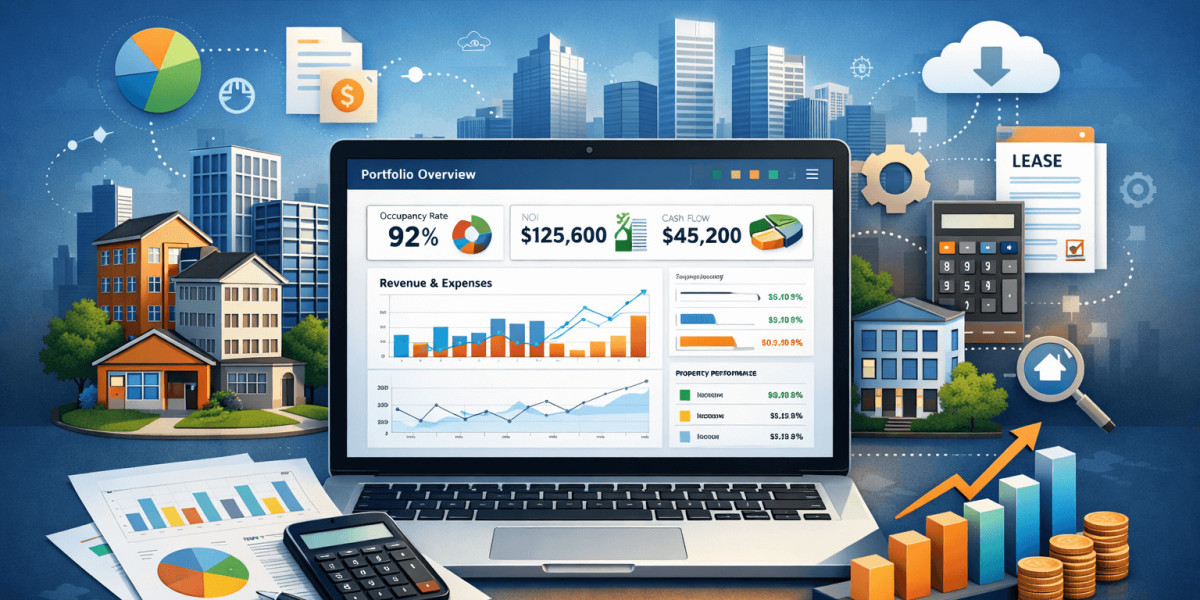

Real estate businesses run on data. Rent rolls, lease terms, operating expenses, maintenance costs, occupancy rates, and investor distributions all shape daily decisions. When that information is scattered across spreadsheets, accounting tools, and email threads, reporting becomes reactive instead of strategic.
This is where real estate reporting software becomes essential. Instead of compiling numbers manually at month-end, property owners and managers can access structured, real-time financial and operational reports that reflect what is actually happening across their portfolio.
In this guide, we’ll break down what this type of system does, why it matters, key features to look for, and how it supports better portfolio decisions.
What Is Real Estate Reporting Software?
At its core, this type of platform centralizes property, lease, tenant, and financial data into one reporting framework. It connects operational activity with accounting outcomes so that performance can be measured accurately.
Rather than relying on static exports, teams can generate:
Property-level income statements
Consolidated portfolio performance reports
Rent roll summaries
Vacancy and occupancy analysis
Expense breakdowns by property or entity
Cash flow and forecast models
The objective is not simply to generate reports, but to build visibility. When data flows directly from leasing, billing, and expense management modules into financial statements, leadership can rely on what they see.
Why Reporting Is a Challenge in Real Estate
Real estate operations are layered. A single portfolio may include:
Multiple properties
Different ownership entities
Various lease structures
Separate bank accounts
Shared operating expenses
Distinct tax and compliance requirements
Without a unified system, teams often depend on:
Manual rent tracking in spreadsheets
CAM reconciliations outside the accounting system
Revenue recognition calculated separately
Entity-level consolidation performed at period end
These processes increase the risk of errors and delay financial close cycles. They also limit leadership’s ability to answer basic questions quickly:
What is the current occupancy rate across the portfolio?
Which properties are underperforming this quarter?
How do operating expenses compare year over year?
What is projected cash flow for the next six months?
Accurate reporting should not require days of data gathering.
Core Capabilities to Look For
Not all platforms offer the same depth. When evaluating solutions, focus on capabilities that align with portfolio complexity.
1. Consolidated Financial Reporting
For firms operating across multiple entities, consolidation is critical. The system should automatically combine data from various subsidiaries while maintaining entity-level visibility.
This reduces the need for manual journal entries and external consolidation sheets.
2. Customizable Dashboards
Executives, property managers, and finance teams require different views. Dashboards should allow users to monitor KPIs such as:
Net operating income (NOI)
Occupancy percentage
Delinquency rates
Lease expiration timelines
Maintenance cost trends
Role-based access ensures each stakeholder sees relevant information.
3. Lease-Based Revenue Tracking
Revenue in real estate is not uniform. Lease escalations, concessions, renewals, and early terminations all impact financial reporting.
An effective system links lease terms directly to billing and revenue recognition. This prevents inconsistencies between what is agreed in contracts and what appears in financial statements.
4. Budget vs. Actual Analysis
Budget comparison should be automated. Property managers must be able to compare planned expenses against actual costs without exporting data to external spreadsheets.
This supports faster decision-making and tighter cost control.
5. Real-Time Data Visibility
Waiting until month-end to identify performance issues creates unnecessary risk. Modern reporting tools update continuously as transactions occur, enabling ongoing monitoring instead of retrospective analysis.
Operational Benefits for Property Managers
Property managers are often the first to feel the limitations of disconnected reporting systems. A structured reporting environment provides measurable operational advantages.
Faster Month-End Close
When rent billing, expense allocation, and revenue recognition are automated, month-end processes require fewer adjustments. Finance teams can close books faster and provide reports sooner.
Improved Portfolio Transparency
Instead of analyzing each property individually, managers can evaluate trends across the portfolio. This helps identify which assets require intervention and which are exceeding expectations.
Better Communication with Investors
Investors expect structured financial reports and consistent performance metrics. Automated reporting improves credibility and reduces time spent preparing investor updates.
Reduced Manual Errors
Manual data consolidation introduces risk. Automated reporting minimizes duplication and formula errors, increasing confidence in reported figures.
Strategic Impact for Real Estate Firms
Beyond operational efficiency, strong reporting systems influence long-term growth.
Data-Driven Expansion Decisions
Before acquiring new properties, firms must evaluate historical performance patterns. Access to accurate portfolio analytics supports acquisition strategy and risk assessment.
Stronger Compliance and Audit Readiness
Real estate businesses often face regulatory scrutiny and investor audits. A centralized reporting structure provides a clear audit trail and documented financial processes.
Forecasting and Scenario Planning
Leadership teams benefit from predictive insights. With integrated data, firms can model:
Occupancy shifts
Rental rate adjustments
Capital expenditure impacts
Cash flow projections
This improves strategic planning and capital allocation decisions.
Cloud-Based vs. Traditional Reporting Systems
Many organizations still rely on traditional accounting software combined with spreadsheets. While this may work for smaller portfolios, it becomes restrictive as complexity grows.
Cloud-based systems offer:
Remote access for distributed teams
Automated updates
Integration with leasing and property management modules
Scalable infrastructure
For growing portfolios, scalability is not optional. Systems should support expansion without requiring a complete technology overhaul.
Choosing the Right Platform
When selecting a solution, consider the following:
Does it integrate with existing accounting and leasing processes?
Can it handle multi-entity and multi-property structures?
Are reports customizable for different stakeholders?
Does it support long-term portfolio growth?
Is there implementation and ongoing support available?
Technology should align with operational structure, not force unnecessary process changes.
Final Thoughts
In real estate, visibility determines control. Firms that depend on manual consolidation and fragmented data struggle to maintain consistent oversight as portfolios expand.
Real estate reporting software brings operational and financial data into one environment, allowing leadership to evaluate performance with confidence. From daily rent tracking to consolidated financial statements, structured reporting supports both operational stability and strategic growth.
For property owners and managers aiming to scale responsibly, investing in a unified reporting framework is not just a technology decision. It is a governance and growth decision.


