
Security screening has come a long way from manual bag checks and handheld wands. Today, the technology sitting at the heart of every serious checkpoint — whether in an airport terminal, a government building, or a busy hotel — is the x ray baggage scanner. It works quietly, processes bags in seconds, and gives trained operators the visual intelligence they need to make fast, accurate decisions.
At Etradefia, we supply screening equipment that security professionals actually trust. Here's what you need to know before investing in a solution for your facility.
What an X Ray Baggage Scanner Actually Does
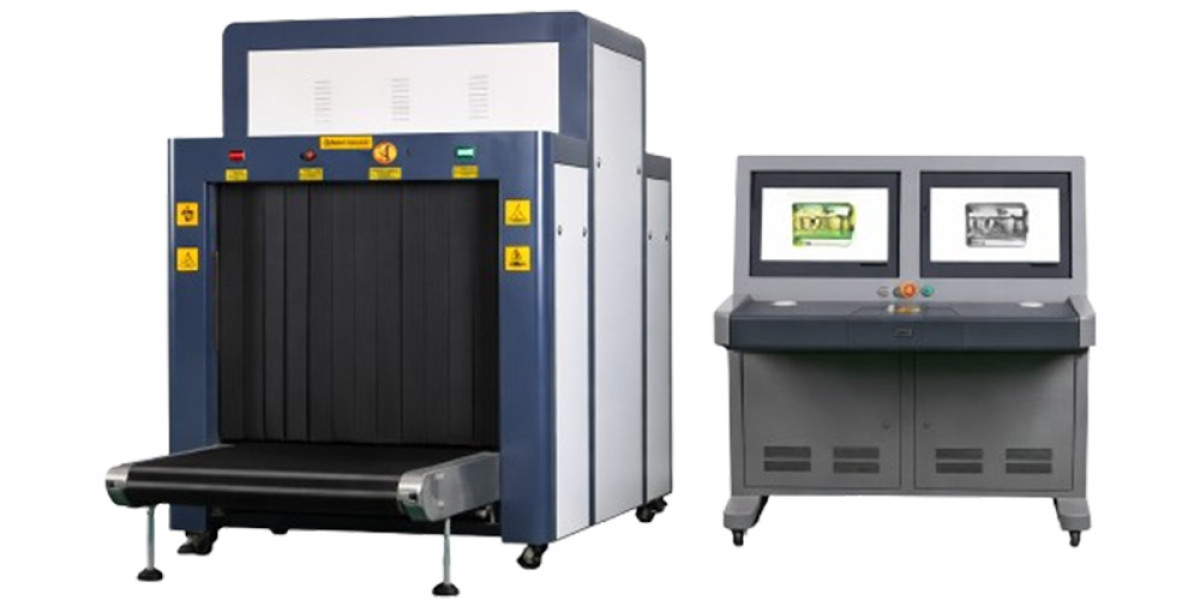
The principle is well established but the engineering behind it is anything but simple. As a bag moves through the conveyor tunnel, the unit fires a focused beam of X-ray energy through the contents. Detectors on the other side capture the attenuated signal and convert it into a high-resolution image on the operator's screen — typically in color-coded layers that distinguish organic materials, metals, and mixed-composition objects at a glance.
A quality baggage scanner machine doesn't just produce an image. It produces a useful image — one with sufficient penetration depth, contrast resolution, and color differentiation to allow the screener to identify threats without stopping every third bag for a manual inspection. That balance between thoroughness and throughput is what separates well-engineered equipment from budget alternatives that create queues and missed detections in equal measure.
The Environments That Demand Reliable Screening
While the airport baggage scanner is perhaps the most familiar application of this technology, the demand for robust screening solutions extends well beyond aviation. Corporate headquarters with high-security requirements, embassies and government buildings, courts and correctional facilities, event venues, luxury hotels, and logistics hubs handling high-value cargo all operate baggage screening checkpoints as a matter of routine.
Each environment carries different expectations. A venue checkpoint needs to keep lines moving without creating a confrontational atmosphere. A government facility may require deeper threat detection and a more detailed audit trail. A logistics operator needs a baggage scanner machine that can handle irregular package sizes and high daily volumes without mechanical fatigue.
Etradefia's range addresses this diversity directly, with models scaled and specified for light-duty screening through to continuous heavy-traffic operation.
Key Features Worth Looking For in an X Ray Scanner Machine
If you're comparing options across suppliers, these are the specifications that genuinely matter in the field.
Image Resolution and Penetration — Measured in wire resolution and steel penetration depth, these figures tell you how much detail the system can resolve and how well it sees through dense objects. Higher resolution and deeper penetration mean fewer blind spots for a screener to worry about.
Dual-Energy Imaging — A modern x ray scanner machine uses two energy levels simultaneously to distinguish material types with greater accuracy. Organic materials appear in orange tones, inorganic materials in blue, and mixed compositions in green — giving operators immediate visual cues without relying on guesswork.
Conveyor Speed and Tunnel Size — These two specs determine which bags the machine can physically handle and how many it can process per hour. Mismatching tunnel dimensions to your typical baggage size creates operational friction from day one.
Image Enhancement Tools — Features like pseudo-color, high-penetration mode, edge enhancement, and image inversion help operators identify suspicious items that might otherwise blend into a cluttered bag interior. These aren't luxury add-ons — in a real screening environment, they're daily necessities.
Operator Interface and Archiving — A clean, responsive display with image storage and retrieval capability supports both real-time decision-making and post-incident review. Some deployments also require network connectivity for centralized monitoring across multiple lanes.
Thinking About Total Value, Not Just Initial Cost
Procurement decisions for security equipment often focus heavily on the upfront number. That's understandable, but it can lead to poor outcomes. An airport baggage scanner or facility screening unit that requires frequent recalibration, produces inconsistent image quality, or breaks down under sustained use will cost more in downtime, maintenance contracts, and reputational exposure than a well-built alternative purchased at a higher initial price.
Etradefia's approach to sourcing and recommending equipment is built on long-term reliability. We look at duty cycle ratings, mean time between failures, warranty terms, and the availability of local technical support before putting any x ray baggage scanner in front of a client. The goal is a system that performs on day one and continues performing five years later.
Get Secure Entry Today: https://www.etradefia.in/product-category/indoor-security-system/x-ray-baggage-scanner/
Why Security Teams Choose Etradefia
Our clients span aviation, government, hospitality, education, and commercial security sectors. What they share is a need for equipment that works consistently and a supplier that stands behind what they sell.
Etradefia provides site assessments, equipment recommendations matched to your specific throughput and threat profile, installation coordination, operator training, and ongoing maintenance support. We don't disappear after the invoice is paid.
If you're ready to upgrade your checkpoint or equip a new facility with a baggage scanner solution built for real-world demands, reach out to the Etradefia team today for a consultation and tailored quote.