
Introduction
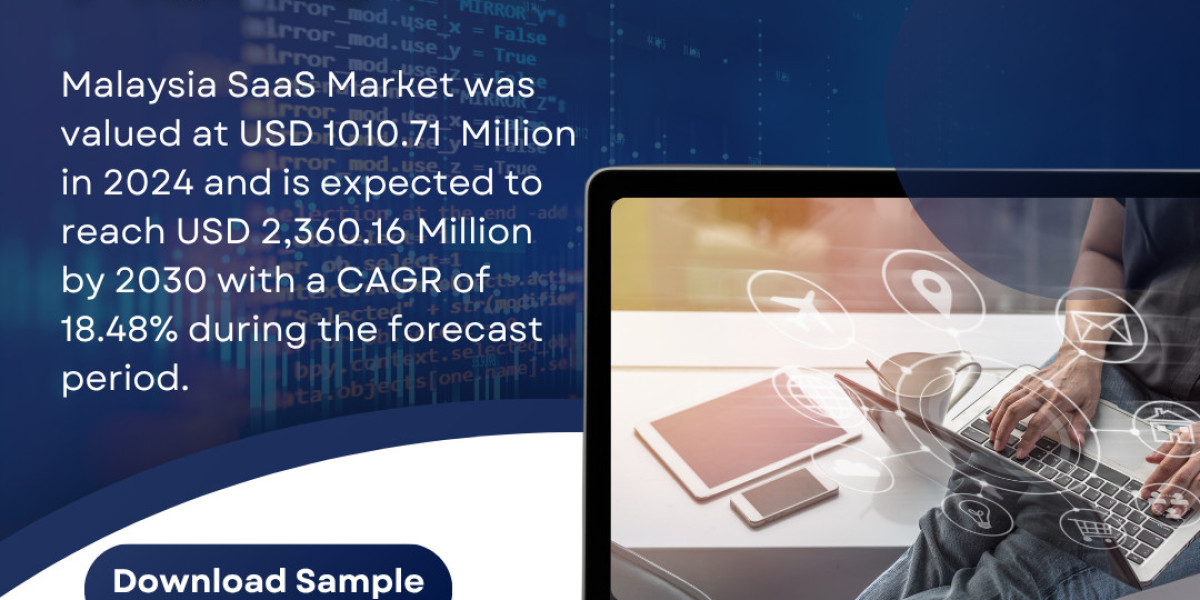
According to TechSci Research report, “Malaysia SaaS Market – By Region, Competition, Forecast and Opportunities, 2020-2030F”, Malaysia SaaS Market was valued at USD 1010.71 Million in 2024 and is expected to reach USD 2,360.16 Million by 2030 with a CAGR of 18.48% during the forecast period.
Malaysia’s digital economy is undergoing a powerful transformation, and at the heart of this evolution lies the Software as a Service (SaaS) industry. As enterprises increasingly prioritize agility, scalability, and innovation, cloud-based software solutions are replacing traditional on-premise systems across industries. The Malaysian business landscape, shaped by ambitious government initiatives, rising entrepreneurial activity, and growing cloud maturity, is witnessing a paradigm shift toward subscription-based software models.
SaaS in Malaysia is no longer confined to basic collaboration tools or email hosting platforms. It now encompasses enterprise resource planning (ERP), customer relationship management (CRM), business intelligence, cybersecurity, fintech applications, healthcare management systems, and AI-powered analytics platforms. As businesses across Malaysia seek to modernize operations and improve competitiveness in regional and global markets, SaaS has become the foundation of their digital ambitions.
Request For Sample Copy of Report For More Detailed Market insight: https://www.techsciresearch.com/sample-report.aspx?cid=27605#requestform
Industry Key Highlights
Malaysia SaaS Market is projected to grow from USD 1.01 billion in 2024 to USD 2.36 billion by 2030.
CAGR of 18.48% signals one of the fastest-growing digital sectors in the country.
Large enterprises dominate adoption due to financial strength and advanced digital strategies.
SMEs are emerging as high-potential growth drivers, fueled by cost-effective subscription models.
East Malaysia (Sabah and Sarawak) is the fastest-growing regional market.
Government initiatives such as MyDIGITAL and national connectivity programs are accelerating adoption.
AI-powered SaaS, low-code/no-code platforms, and cybersecurity SaaS are gaining momentum.
Hybrid and multi-cloud deployments are becoming standard enterprise strategies.
Market Overview: Malaysia’s Digital Leap
Malaysia has long positioned itself as a rising digital hub in Southeast Asia. With strong broadband penetration, expanding fiber-optic networks, and the deployment of 5G infrastructure, the country is building a resilient digital backbone capable of supporting cloud-native ecosystems.
The SaaS model offers a compelling value proposition in this environment. Unlike traditional software, SaaS eliminates large upfront capital expenditure. It replaces hardware procurement, infrastructure maintenance, and manual software updates with a subscription-based, scalable, and flexible operating model. For Malaysian enterprises navigating economic uncertainty and evolving consumer expectations, this shift provides operational predictability and cost efficiency.
Digital transformation is no longer optional; it is strategic. From financial institutions implementing digital banking platforms to manufacturing companies integrating Industry 4.0 technologies, SaaS has become the core enabler of business modernization.
Key Market Drivers
1. National Digital Transformation Initiatives
Malaysia’s government has actively championed digital growth through strategic blueprints and technology-focused reforms. Policies aimed at strengthening cloud adoption, enhancing connectivity, and improving digital literacy have significantly accelerated SaaS adoption across industries.
These initiatives encourage enterprises to migrate legacy systems to cloud-based platforms while fostering innovation in artificial intelligence, automation, and data analytics. By positioning Malaysia as a regional digital economy leader by 2030, policymakers have created a favorable regulatory and investment climate for SaaS providers.
2. SME Digitalization Momentum
Small and medium enterprises (SMEs) represent the backbone of Malaysia’s economy. Historically constrained by limited budgets and IT infrastructure, SMEs are increasingly turning to SaaS solutions to overcome technological barriers.
SaaS enables SMEs to:
Access enterprise-grade tools without heavy capital investment
Scale operations as business grows
Improve collaboration across distributed teams
Automate workflows and reduce operational inefficiencies
Cloud-based accounting software, CRM platforms, HR management systems, and e-commerce tools are especially popular among SMEs seeking competitive differentiation.
3. Rise of Hybrid and Remote Work Models
The evolution of workplace dynamics has dramatically reshaped software demand. Hybrid and remote work arrangements have become integral to corporate strategy. As organizations embrace distributed teams, SaaS tools such as collaboration platforms, project management systems, and secure communication software have become indispensable.
Platforms provided by global leaders such as Microsoft Corporation, Google LLC, and Adobe Inc. have experienced significant uptake in Malaysia due to their ability to support remote productivity and real-time collaboration.
4. Cloud Infrastructure Expansion
Malaysia’s growing cloud ecosystem supports the SaaS boom. Investments in hyperscale data centers and cloud regions provide the infrastructure necessary for secure and scalable SaaS delivery.
The expansion of cloud services by Amazon Web Services, Oracle Corporation, and SAP SE has strengthened local cloud capabilities and reduced latency, enhancing SaaS performance for enterprises nationwide.
Emerging Trends Shaping the Malaysia SaaS Market
AI-Driven SaaS Platforms
Artificial intelligence is transforming SaaS functionality. AI-powered analytics, predictive insights, chatbots, and automation features are becoming standard components of modern SaaS offerings. Malaysian enterprises are increasingly adopting intelligent CRM systems, AI-driven financial forecasting tools, and automated HR recruitment platforms.
AI integration enhances decision-making speed, reduces human error, and improves customer engagement—making SaaS solutions more strategic than operational.
Vertical SaaS Expansion
Industry-specific SaaS (vertical SaaS) is gaining traction across healthcare, finance, education, and retail sectors. These tailored solutions address regulatory requirements and operational complexities unique to each industry.
Healthcare SaaS platforms, for instance, integrate patient data management, appointment scheduling, telemedicine, and compliance tracking into unified systems. Similarly, fintech SaaS applications support digital payments, risk management, and regulatory reporting.
Low-Code and No-Code Platforms
Low-code and no-code development tools are democratizing software customization. Businesses without large IT teams can now build workflows, dashboards, and automation systems through intuitive interfaces.
This trend significantly expands SaaS accessibility, enabling SMEs and startups to innovate rapidly without heavy reliance on developers.
Cybersecurity-Focused SaaS
As cyber threats increase, demand for cloud-based security platforms is rising sharply. SaaS providers now offer encryption, compliance monitoring, endpoint protection, and identity management as integrated services.
With Malaysia’s Personal Data Protection Act (PDPA) enforcing strict data governance standards, enterprises prioritize SaaS solutions that guarantee compliance and robust security protocols.
Subscription Optimization and Cost Transparency
Organizations are increasingly focused on SaaS expense management. Subscription tracking, usage-based billing models, and cloud cost optimization tools are gaining importance as companies seek greater visibility into IT expenditures.
Competitive Analysis
- Gcloud Technology Sdn. Bhd. (Freshworks Inc.)
- clickTRUE Malaysia (HubSpot, Inc.)
- Oracle Corporation Malaysia Sdn. Bhd. (Oracle Corporation)
- SAP Malaysia Sdn Bhd (SAP SE)
- Microsoft (Malaysia) Sdn Bhd (Microsoft Corporation)
- Transfingo (Malaysia) Sdn. Bhd. (Xero Limited)
- Amazon Web Services Malaysia Sdn. Bhd. (Amazon.com, Inc.)
- Telcowin Sdn. Bhd. (Salesforce, Inc.)
- Google LLC (Alphabet Inc.)
- Adobe Inc
Future Outlook
The Malaysia SaaS market is poised for transformative expansion over the next decade. As digital maturity increases, SaaS adoption will extend beyond IT departments into core business functions. Artificial intelligence, blockchain integration, IoT connectivity, and advanced analytics will redefine SaaS capabilities.
SMEs will play a pivotal role in shaping market growth, while large enterprises will continue investing in advanced, industry-specific solutions. Regional expansion into East Malaysia will foster balanced national development.
Contact US:
Techsci Research LLC
420 Lexington Avenue, Suite 300,
New York, United States- 10170
Tel: +13322586602
Email: sales@techsciresearch.com
Web: https://www.techsciresearch.com/n