
In high-load industrial environments, bearing failure is not just a maintenance issue—it is a productivity risk. CNC spindles, heavy-duty motors, and automation systems operate under strong radial and axial forces. When bearings cannot manage these loads, machine accuracy drops quickly.
Engineers often face vibration, heat buildup, and axial displacement when using standard bearing solutions. These problems affect surface finish, dimensional precision, and long-term spindle health. Over time, this leads to increased downtime and higher operating costs.
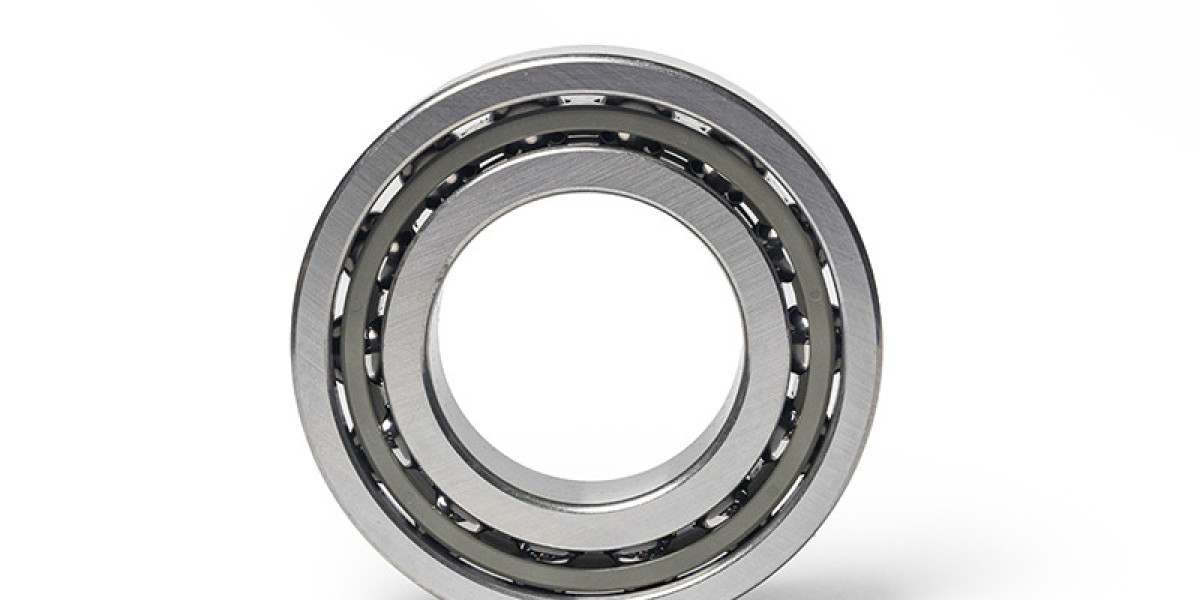
To maintain precision under heavier load conditions, a more robust bearing design is required. The 72 series angular contact ball bearing is engineered to provide higher load capacity while maintaining speed and stability in demanding applications.
The Industry Problem: High Loads, Low Accuracy
Manufacturing equipment today runs faster and carries heavier cutting forces than ever before. As load increases, traditional bearings experience:
Increased internal stress
Raceway deformation
Higher operating temperatures
Reduced rigidity
In CNC machining centers, even minor axial movement can cause dimensional errors. In electric motors, axial instability can reduce efficiency and increase noise.
For manufacturers, the result is:
Scrap production
Reduced machine lifespan
Unexpected shutdowns
Higher maintenance expenses
These challenges require a bearing solution built for combined heavy loads.
The Solution: 72 Series Angular Contact Ball Bearing
The 72 angular contact ball bearing is designed specifically for higher radial and axial load capacity compared to lighter series designs.
The 72 series features:
Larger ball diameter
Stronger internal geometry
Optimized contact angle
Increased load handling capability
Because of its design, it can handle combined forces without sacrificing stability.
For detailed product specifications, visit the 72 angular contact ball bearing page here:
https://yuwei-bearing.com/product/72-angular-contact-ball-bearing/
How It Works Under Combined Loads
Contact Angle Engineering
The contact angle allows the bearing to support axial loads efficiently. Force is transferred through the balls at a defined angle, improving stiffness.
Larger Ball Size
Compared to lighter series bearings, the 72 series typically uses larger rolling elements. This increases contact area and improves load capacity.
Preload Configuration
Preloading removes internal clearance. This enhances rigidity and reduces vibration, especially in spindle systems.
Balanced Friction Control
Although built for higher loads, optimized surface finishing ensures controlled friction and manageable temperature rise.
Together, these design features allow stable high-load performance.
Why Traditional Bearings Fall Short
Deep Groove Ball Bearings
Limited axial stiffness
Designed mainly for radial loads
Less suitable for heavy combined forces
Tapered Roller Bearings
High load capacity
Higher friction levels
Reduced maximum speed
Standard Angular Contact Bearings (Light Series)
Suitable for high speed
Limited heavy-load endurance
The 72 series balances load strength and speed capability more effectively than these traditional options.
Key Performance Features
High Load Capacity
Larger rolling elements improve radial and axial support.
Improved Rigidity
Higher stiffness minimizes shaft deflection.
High-Speed Compatibility
Optimized geometry supports demanding RPM levels.
Precision Manufacturing
Tight tolerances reduce vibration and noise.
Thermal Stability
Lower friction design helps control temperature under load.
Flexible Mounting
Available in matched pairs for back-to-back or face-to-face arrangements.
These features make the 72 series ideal for heavy-duty precision systems.
Comparison With Other Bearing Types
| Feature | 72 Series Angular Contact | 70 Series Angular Contact | Deep Groove Bearing |
|---|---|---|---|
| Radial Load Capacity | High | Moderate | Moderate |
| Axial Load Capacity | High | Moderate | Low |
| Speed Capability | High | Very High | High |
| Rigidity | High | High | Medium |
| Heavy-Duty Use | Excellent | Good | Limited |
The 72 series is better suited for applications where load strength is more important than ultra-high speed.
Real Industrial Applications
CNC Machining Centers
Handles cutting forces and maintains spindle precision.
Industrial Gearboxes
Supports combined dynamic loads.
Electric Motors
Maintains shaft alignment under axial stress.
Automation Systems
Ensures stability in high-load motion assemblies.
Pumps and Compressors
Manages axial thrust forces effectively.
In these sectors, reliability directly impacts production efficiency.
Why Manufacturers Choose the 72 Series
Manufacturers prefer the 72 series for clear operational reasons:
Reduced vibration under heavy loads
Improved machining accuracy
Longer service intervals
Lower lifecycle cost
Stable performance at high speeds
Because it maintains stiffness under stress, machine calibration remains consistent. This reduces scrap rates and protects equipment investment.
For complete technical data and sizing information, review the 72 angular contact ball bearing here:
https://yuwei-bearing.com/product/72-angular-contact-ball-bearing/
How to Select the Right 72 Series Bearing
Selecting the proper bearing requires careful evaluation.
1. Load Analysis
Calculate maximum radial and axial loads.
2. Speed Requirements
Confirm operating RPM and lubrication method.
3. Contact Angle Selection
Choose angle based on axial load intensity.
4. Preload Level
Select light, medium, or heavy preload based on rigidity needs.
5. Mounting Arrangement
Consider single use or paired configuration.
6. Environmental Conditions
Evaluate temperature range, contamination risk, and lubrication type.
Correct selection ensures long-term performance and reliability.
Conclusion
In heavy-load industrial environments, bearing choice directly impacts productivity and equipment lifespan. Standard solutions often fail under combined stress and high operating speeds.
The 72 series angular contact ball bearing provides stronger load support, improved rigidity, and stable thermal performance. It offers the balance manufacturers need between strength and speed.
For engineers and procurement teams focused on long-term reliability, the 72 series is a dependable and performance-driven solution.


