
As global utilities and EPC contractors face increasing pressure to improve network safety, reduce losses, and accelerate electrification projects, ABC cable (Aerial Bundled Cable) has become a preferred solution for modern overhead distribution systems.
This technical guide explains what ABC cable is, how it works, and why utilities and infrastructure developers increasingly choose it for reliable, long-term power distribution.
What Is ABC Cable?
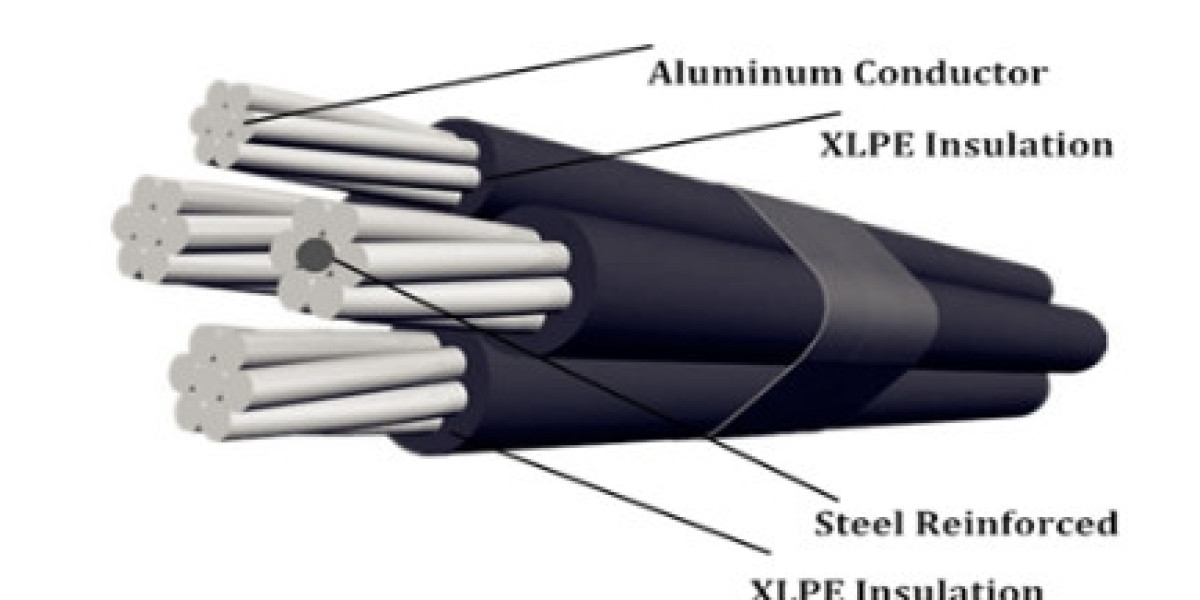
ABC cable refers to an insulated overhead conductor system where multiple aluminum phase conductors and a neutral messenger are bundled together into a single compact assembly.
Unlike traditional bare overhead conductors such as AAC, AAAC, or ACSR, ABC cable uses cross-linked polyethylene (XLPE) insulated conductors, allowing the line to operate safely even in close proximity to buildings, trees, and public areas.
For power utilities, urban developers, and rural electrification programs, ABC cable offers an advanced alternative to conventional overhead lines while retaining the advantages of overhead installation.
Why ABC Cable Is Becoming the Preferred Distribution Standard
1. Improved Public and Network Safety
One of the primary drivers behind ABC cable adoption is safety. The insulated construction significantly reduces the risk of:
Accidental contact with live conductors
Short circuits caused by vegetation
Flashovers during storms and heavy wind conditions
For utilities operating in dense residential zones, informal settlements, or roadside installations, ABC cable provides a much safer overhead solution.
2. Reduced Power Loss and Fault Rate
The compact and insulated design of aerial bundled cable minimizes phase-to-phase faults and external interference. This results in:
Lower outage frequency
Improved system reliability
Reduced maintenance intervention
For grid operators, this translates into measurable operational savings over the lifecycle of the line.
3. Strong Protection Against Electricity Theft
In many developing and fast-growing power networks, illegal connections are a major concern. ABC cable offers higher resistance to tampering and unauthorized tapping, helping utilities protect revenue and improve network discipline.
Typical Structure of ABC Cable
An engineered ABC cable system generally consists of:
Phase Conductors
Made from stranded aluminum conductors (commonly aluminum alloy or pure aluminum), each phase is insulated with XLPE.
Neutral Messenger / Supporting Conductor
The neutral conductor often acts as the mechanical support for the bundled assembly and carries both mechanical tension and electrical return current.
Optional Street-Lighting or Control Cores
Some ABC cable configurations include additional insulated conductors for public lighting or control circuits.
This flexible structure allows ABC cable to be customized for different voltage levels and network layouts.
Standard Applications of ABC Cable
ABC cable is widely used in:
Low-voltage overhead distribution networks
Urban and suburban power distribution projects
Rural electrification programs
Industrial park and commercial zone infrastructure
Service drop connections to buildings
For utilities seeking safer alternatives to bare overhead conductors without moving to costly underground cabling, ABC cable provides an optimal middle solution.
ABC Cable vs Traditional Overhead Conductors
| Feature | ABC Cable | AAC / AAAC / ACSR |
|---|---|---|
| Insulation | Fully insulated | Bare conductor |
| Safety level | Very high | Moderate |
| Fault resistance | Excellent | Limited |
| Installation | Overhead, compact | Overhead, wider spacing |
| Theft protection | Strong | Low |
| Maintenance | Low | Moderate to high |
While AAC, AAAC, and ACSR remain critical for transmission and long-span distribution lines, ABC cable is specifically engineered for distribution environments where safety, compactness, and reliability are essential.
Key Technical Advantages for Utilities and EPC Contractors
Compact Line Design
Because the conductors are bundled together, ABC cable requires less right-of-way and narrower pole corridors. This is particularly beneficial in congested urban infrastructure projects.
Faster Installation
ABC cable systems simplify stringing operations and reduce cross-arm complexity. For EPC contractors managing large distribution rollouts, this leads to shorter construction schedules and lower installation labor costs.
Higher Network Resilience
The insulated conductors significantly reduce outages caused by wind-driven contacts, falling branches, and temporary obstructions.
ABC Cable Manufacturing Capability at HNBF Power
As a global manufacturer of overhead conductors and power cables, HNBF Power supplies high-performance ABC cable systems designed to meet the real-world demands of modern distribution networks.
HNBF Power’s ABC cable solutions are engineered with:
High-purity aluminum and aluminum alloy conductors
Durable XLPE insulation for long service life
Configurations suitable for multiple low-voltage and distribution voltage classes
Customized core arrangements for utility-specific network requirements
With deep expertise in AAC, AAAC, ACSR, ABC, LV power cable, and concentric cable manufacturing, HNBF Power supports utilities, EPC contractors, and grid developers with technically optimized and project-ready cable solutions.
Selection Considerations When Specifying ABC Cable
When engineers and procurement teams prepare an ABC cable specification, the following technical factors should be evaluated:
Conductor Size and Current Rating
Correct cross-section selection is critical to match load growth and thermal performance requirements.
Neutral Messenger Strength
The mechanical strength of the supporting conductor must meet span length and climatic load requirements.
Insulation Material and Thickness
XLPE insulation grade directly affects voltage rating, aging performance, and environmental durability.
Installation Environment
Urban density, vegetation exposure, pollution level, and coastal conditions all influence cable design choices.
A professional manufacturer with strong engineering support is essential for correct system selection.
FAQs About ABC Cable
1. What does ABC cable stand for?
ABC cable stands for Aerial Bundled Cable, a type of insulated overhead distribution cable system.
2. Is ABC cable suitable for low-voltage networks?
Yes. ABC cable is widely used in low-voltage and secondary distribution networks, especially for residential and commercial supply.
3. Can ABC cable replace bare conductors completely?
ABC cable is ideal for distribution environments, but long-distance transmission lines still typically require AAC, AAAC, or ACSR conductors.
4. Does ABC cable reduce maintenance costs?
Yes. The insulated and compact design significantly reduces fault incidents and vegetation-related maintenance.
Power Your Distribution Projects with HNBF Power
If your upcoming distribution project requires safer, more compact, and highly reliable ABC cable systems, HNBF Power is ready to support your engineering and procurement teams with customized manufacturing solutions.
Contact HNBF Power today to discuss your ABC cable specifications and receive a tailored solution designed for your power distribution network.


