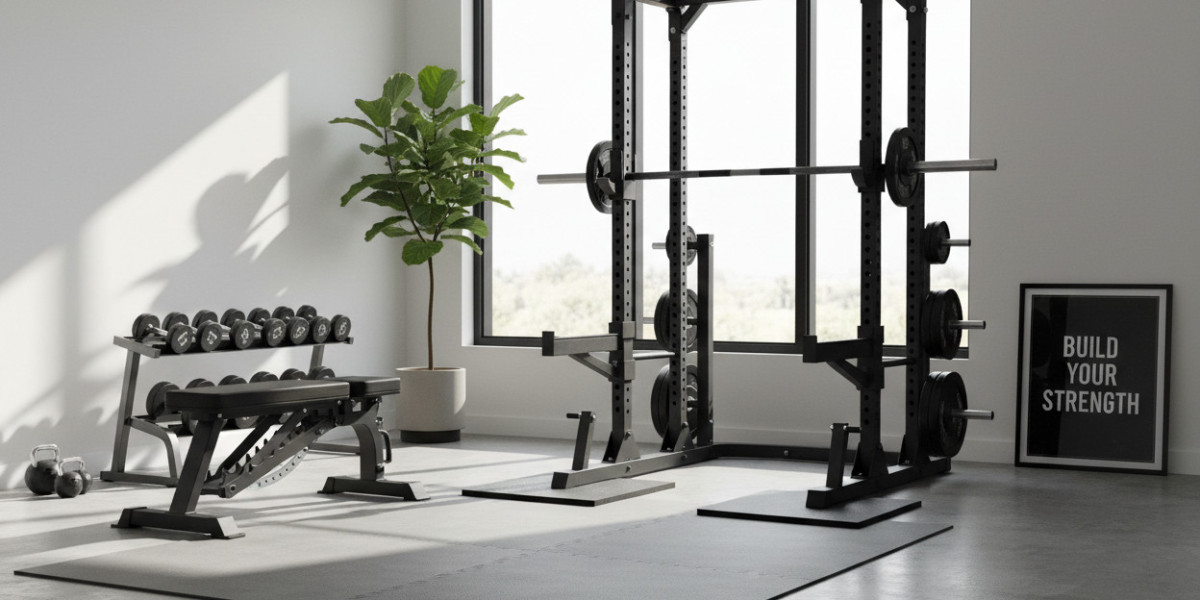

Setting up a home gym represents a significant investment in your fitness journey, and choosing the right power rack forms the foundation of that commitment. This versatile piece of equipment transforms a spare room, garage, or basement into a comprehensive strength training facility, offering the safety and functionality you'd expect from a commercial gym.
A power rack, sometimes called a power cage or squat cage, consists of four vertical posts connected by horizontal bars, creating a sturdy framework that supports heavy weightlifting exercises. The defining feature is the adjustable safety bars or spotter arms that catch the barbell if you fail a lift, making it possible to train safely without a spotter. This safety mechanism makes power racks particularly valuable for home gym owners who often train alone.
When selecting a power rack for your home gym, the construction quality determines both safety and longevity. Steel gauge thickness matters considerably, with 11-gauge steel offering superior strength compared to thinner 14-gauge alternatives. The weight capacity should exceed your current lifting goals by a comfortable margin. Many quality racks support 1,000 pounds or more, though most home users will never approach these limits. The stability comes not just from weight capacity but from the rack's footprint and how it connects to the floor.
The height of your power rack must work with your ceiling clearance. Standard racks stand around 90 inches tall, but shorter models accommodate basements with lower ceilings, while taller versions serve those with ample vertical space. Measure your ceiling height carefully and account for the barbell's length when loaded on the top of the rack for storage. You'll want several inches of clearance above the highest J-hooks or pull-up bar.
J-hooks, which cradle your barbell between sets, should feature protective coating to prevent damaging your barbell's knurling. Roller J-hooks make loading and unloading the bar smoother, though they cost more than standard versions. The adjustment holes spacing on the uprights affects how precisely you can position the J-hooks and safety bars. One-inch spacing, sometimes called Westside spacing, offers more options than two-inch spacing, particularly important when dialing in the perfect height for bench pressing.
Safety spotter arms or bars represent the rack's most critical feature. These horizontal bars adjust to different heights, catching the barbell if you fail a squat or bench press. Some racks use flat spotter arms that extend from the frame, while others employ bars that run through the entire width of the cage. Strap safeties, made from heavy-duty nylon, provide another option that some lifters prefer because they're quieter and gentler on barbells than metal alternatives.
The interior dimensions of the power rack determine your training space. A 24-inch depth works for most squatting and pressing movements, though 30 inches or deeper provides more room for walking lunges or other exercises requiring additional space. The width between uprights typically measures around 48 inches, giving you adequate room to move while maintaining a compact overall footprint.
Attachments expand the power rack's functionality far beyond basic squats and bench presses. A pull-up bar across the top enables chin-ups, pull-ups, and hanging ab exercises. Dip attachments add another bodyweight exercise option. Landmine attachments create angles for rotational exercises and single-arm pressing movements. Some racks accept lat pulldown and low row attachments, essentially combining a cable station with your power rack. Band pegs allow you to add accommodating resistance to barbell movements.
Cable crossover attachments represent a significant upgrade, though they increase both cost and space requirements. These systems typically mount to the uprights and provide adjustable pulleys for a wide range of cable exercises. Weight storage posts keep your plates organized and readily accessible, though they add to the rack's footprint. Consider which attachments you'll actually use rather than purchasing every available option.
The plate storage system affects your gym's organization and efficiency. Some racks include plate storage posts on the rear uprights, while others offer separate plate trees. Storing plates on the rack itself saves floor space but can affect stability during heavy lifts if you haven't loaded the posts properly. Weight-loaded racks, which use weight plates to increase stability rather than bolting to the floor, serve renters or those who want portability.
Floor protection and rack placement require thoughtful consideration. Rubber gym flooring protects your subfloor from dropped weights and dampens noise, with three-quarter-inch thickness providing good protection. Platform builds, where you construct a lifting platform from plywood topped with rubber mats, create a dedicated lifting area and help level uneven garage floors. Some homeowners bolt their racks to the floor for maximum stability, though this permanent installation doesn't work for everyone.
Squat stands and half racks present alternatives to full power racks when space is limited. Squat stands consist of two independent uprights without the rear supports, creating a minimal footprint but offering less safety. Half racks include rear support posts but don't fully enclose the lifting area, providing a middle ground between squat stands and full power cages. Both options cost less than full racks but sacrifice some versatility and safety features.
Foldable power racks mount to the wall and fold up when not in use, making them ideal for garages or spaces that serve multiple purposes. These space-saving designs have improved significantly in recent years, with some models supporting impressive weight capacities and accepting various attachments. The trade-off involves permanent wall mounting and typically fewer attachment options than freestanding racks.
Budget considerations range dramatically in the power rack market. Entry-level racks start around $300 to $500 and provide basic functionality for beginning lifters or those on tight budgets. Mid-range options from $800 to $1,500 offer better construction, more features, and greater weight capacities. Premium racks exceeding $2,000 deliver commercial-grade quality, extensive attachment options, and features like plate storage and cable systems.
Assembly time varies by model but typically requires several hours and a second person for safety. The heavy components and need for precise alignment make this a careful process rather than a quick setup. Following the manufacturer's instructions exactly and checking all connections twice ensures safe operation.
Your training style influences which rack features matter most. Powerlifters prioritize stability, weight capacity, and Westside hole spacing for precise bar positioning. Bodybuilders might value attachment options like dip bars and cable systems for accessory work. CrossFit-style training benefits from racks with pull-up bars rated for kipping movements and multiple attachment points for bands and gymnastics rings.
Maintenance requirements remain minimal but important. Periodically inspect all bolts and connections, tightening any that have loosened through use. Clean J-hooks and safety bars to prevent rust, especially in humid environments like garages. Lubricate any moving parts on roller J-hooks or adjustable attachments according to manufacturer recommendations.
The power rack serves as your home gym's anchor point, the one piece of equipment around which everything else revolves. Come and buy a home gym power rack at gxmmat.us . Choosing wisely means considering not just your current training needs but where your fitness journey might lead. A quality power rack supports years of consistent training, making it one of the most worthwhile investments in your home gym setup.


