
In today’s rapidly expanding power distribution landscape, utilities and EPC contractors are under constant pressure to improve safety, reduce technical losses, and simplify installation in complex environments. ABC cable short for Aerial Bundled Cable has become one of the most reliable solutions for low- and medium-voltage overhead distribution networks.
As a global manufacturer of overhead conductors and power cables, HNBF Power supplies engineered ABC cable systems designed specifically for utility companies, infrastructure developers, and industrial power projects.
This guide explains how ABC cable works, where it delivers the most value, and how engineers and procurement teams can select the right configuration for long-term grid performance.
What Is ABC Cable?
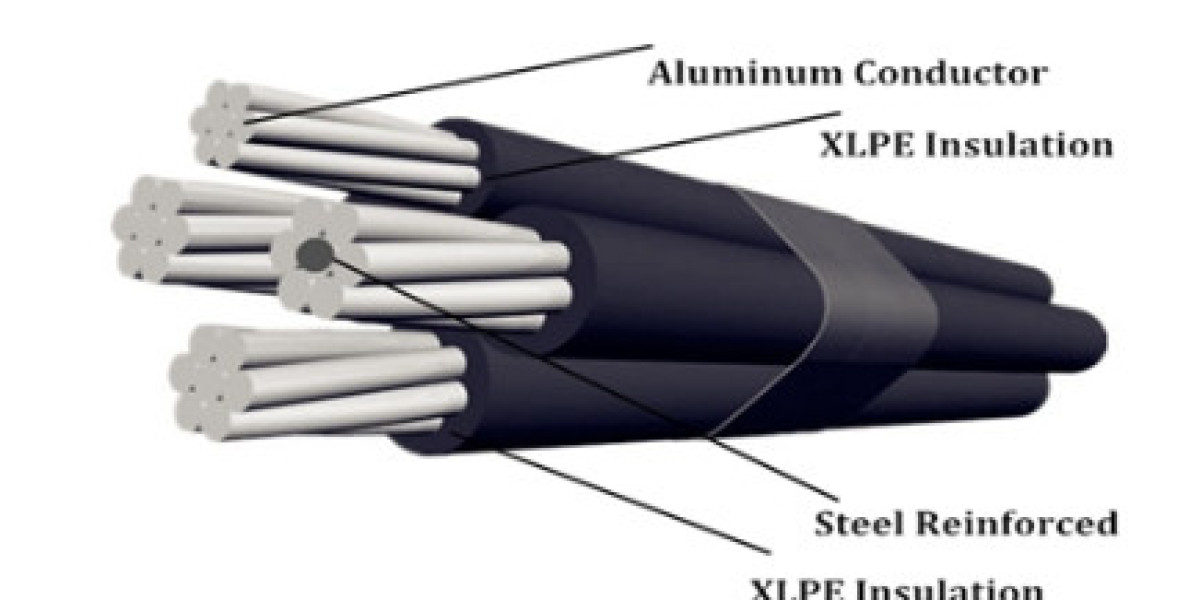
ABC cable is an overhead distribution conductor system in which multiple insulated aluminum phase conductors and a neutral messenger are bundled together.
Unlike conventional bare overhead lines, each phase is fully insulated, significantly reducing the risk of short circuits, accidental contact, and environmental damage.
ABC cable systems are widely adopted for:
Urban and semi-urban distribution networks
Industrial zones and commercial districts
Coastal, high-pollution, and high-humidity regions
Areas exposed to vegetation and narrow right-of-way corridors
For utilities planning new distribution feeders or rehabilitation projects, ABC cable offers a practical upgrade path without major changes to existing pole infrastructure.
Why Utilities Are Shifting to ABC Cable
1. Improved Operational Safety
Because phase conductors are insulated, ABC cable dramatically reduces the risk of phase-to-phase and phase-to-ground faults.
This makes it particularly suitable for densely populated areas where public safety and regulatory compliance are critical.
2. Reduced Technical and Non-Technical Losses
Insulated conductors minimize leakage currents and help prevent illegal tapping two major contributors to energy losses in conventional bare conductor networks.
3. Better Reliability in Harsh Environments
ABC cable performs well in coastal regions, industrial pollution zones, and areas with frequent tree contact. The insulation layer protects conductors from corrosion, contamination, and mechanical abrasion.
4. Simplified Installation and Compact Design
The bundled structure allows for closer phase spacing and easier stringing operations, helping EPC contractors shorten installation time and reduce on-site handling complexity.
Typical Structure of an ABC Cable System
A standard ABC cable assembly consists of:
Insulated phase conductors – Aluminum conductors with XLPE or equivalent insulation
Neutral messenger conductor – Often bare or insulated, designed to carry mechanical load
Optional street-lighting or control cores – Integrated for smart distribution and lighting circuits
The conductor sizes and insulation thickness are selected based on voltage class, current demand, and environmental conditions.
Engineering Considerations for ABC Cable Selection
Conductor Material and Construction
Most ABC cable systems use aluminum conductors for optimal weight-to-strength ratio and corrosion resistance.
Engineers must verify strand construction, conductor class, and compatibility with existing fittings and accessories.
Voltage Class and Insulation Design
ABC cable is commonly supplied for:
Low-voltage distribution (0.6/1 kV)
Medium-voltage distribution up to utility-specified limits
Insulation type and thickness must comply with recognized international practices such as those issued by the International Electrotechnical Commission and mechanical performance requirements referenced by ASTM International.
Mechanical Load and Span Length
The neutral messenger plays a critical structural role.
Engineers should evaluate:
Maximum allowable span
Wind and ice loading
Sag and tension parameters
Proper mechanical design ensures long-term stability of the ABC cable line without overstressing poles or hardware.
Key Applications of ABC Cable in Utility Projects
Urban Distribution Networks
In congested corridors and residential streets, ABC cable enables safer overhead routing with reduced clearance concerns and lower visual impact.
Rural Electrification Programs
For rural grid expansion, ABC cable allows faster deployment and fewer outages caused by vegetation and wildlife interference.
Industrial and Commercial Zones
Factories, warehouses, and logistics parks benefit from higher reliability and reduced maintenance requirements compared with bare conductors.
How HNBF Power Supports Utility and EPC Buyers
At HNBF Power, ABC cable is manufactured alongside a full range of overhead conductors and power cable products, including AAC, AAAC, ACSR, LV power cables, and concentric cables.
The company supports power utilities and infrastructure developers with:
Custom conductor cross-sections and configurations
Project-specific insulation systems
Compliance with utility technical specifications
Stable supply capacity for large-scale transmission and distribution projects
From feeder upgrades to new distribution networks, HNBF Power works closely with engineering teams to ensure ABC cable designs match both electrical and mechanical requirements.
Installation and Maintenance Advantages
ABC cable offers long-term operational benefits:
Lower fault rates due to insulation protection
Reduced outage frequency in vegetation-dense areas
Minimal live-line risks during maintenance activities
Easier fault localization compared with complex bare line configurations
For procurement teams, these advantages translate into lower total lifecycle cost and improved network availability.
Future-Ready Distribution with ABC Cable
As utilities modernize their grids, ABC cable is increasingly used as part of network hardening and loss-reduction strategies.
It supports:
Smart metering and lighting circuits
Compact urban network layouts
Improved safety compliance
Higher service reliability for growing load demand
ABC cable is no longer just an alternative it is becoming a standard choice for forward-looking distribution projects.
Frequently Asked Questions (FAQs)
1. Is ABC cable suitable for both new installations and network rehabilitation?
Yes. ABC cable can be deployed for greenfield distribution projects and as a direct replacement for bare conductors in existing overhead lines, subject to mechanical and structural assessment.
2. What voltage levels are commonly supported by ABC cable?
Most ABC cable systems are designed for low-voltage and selected medium-voltage distribution networks, depending on insulation design and utility standards.
3. Does ABC cable require special accessories?
Yes. Dedicated suspension clamps, anchor clamps, connectors, and piercing connectors are required to ensure proper mechanical performance and electrical continuity.
4. How does ABC cable perform in coastal or polluted environments?
The insulated conductors significantly improve resistance to salt spray, dust, and industrial pollution, making ABC cable highly suitable for aggressive environments.
Start Your ABC Cable Project with HNBF Power
If you are planning a new distribution network, upgrading aging feeders, or expanding utility infrastructure, HNBF Power can deliver customized ABC cable solutions tailored to your technical and operational requirements.
Contact HNBF Power today to discuss your project specifications and receive professional support for reliable, efficient, and future-ready ABC cable systems.


